| 1903 Gustav Stickley
#803 China Hutch (Reproduction) If you are a fan of Harvey Ellis designed Gustav Stickley furniture, check this one out. Dimensions are 60" high x 36" wide x 15" deep. This diminutive beauty exemplifies all the high points of a Harvey Ellis design with a thin top, wide overhang, arches at the top of the door and the bottom front rail, and subtly tapered legs. The legs are gently double-tapered from a flat area in the middle of the legs toward the top and bottom. As stated above, this is not an original Gustav piece, but I have done my best to complete this piece in the Craftsman tradition. It has been faithfully reproduced following pictures and measured drawings of the original #803, and matched to the finish of original Stickley pieces I've examined. Please allow time for the detailed pictures to load, and you'll see the cohesive quartersawn white oak ray flecks throughout and the detail to traditional craftsmanship that will make this hutch a family heirloom. |
 |
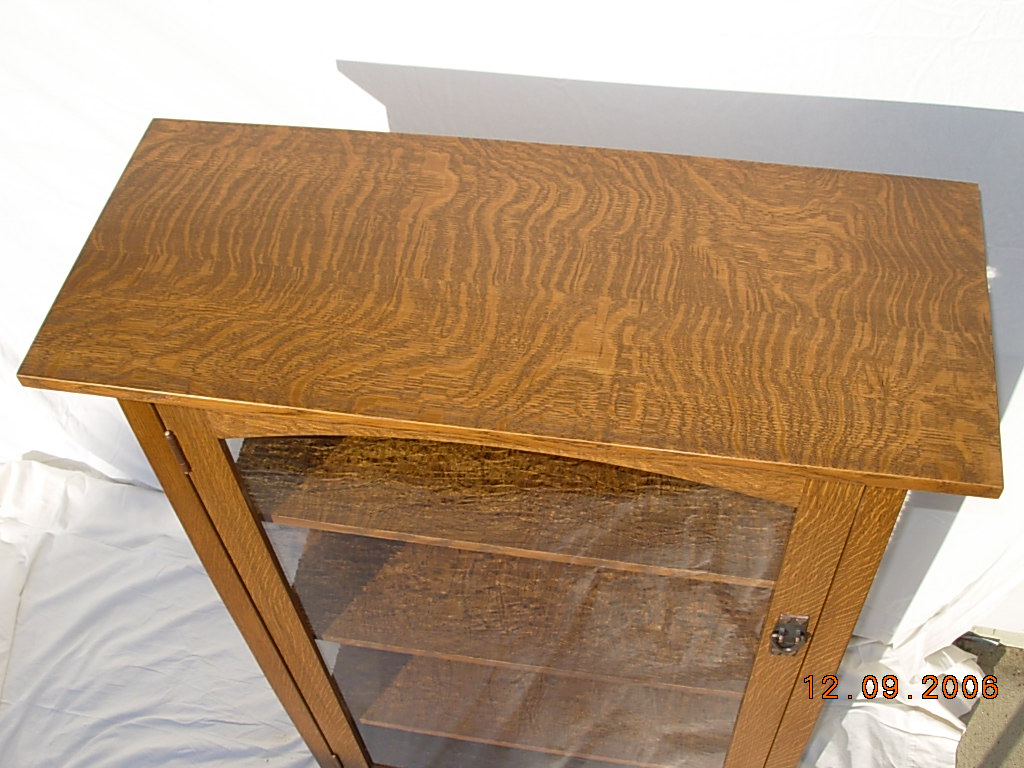 |
| The solid white oak top is carefully book-matched with symmetrical ray flakes radiating from the center. |
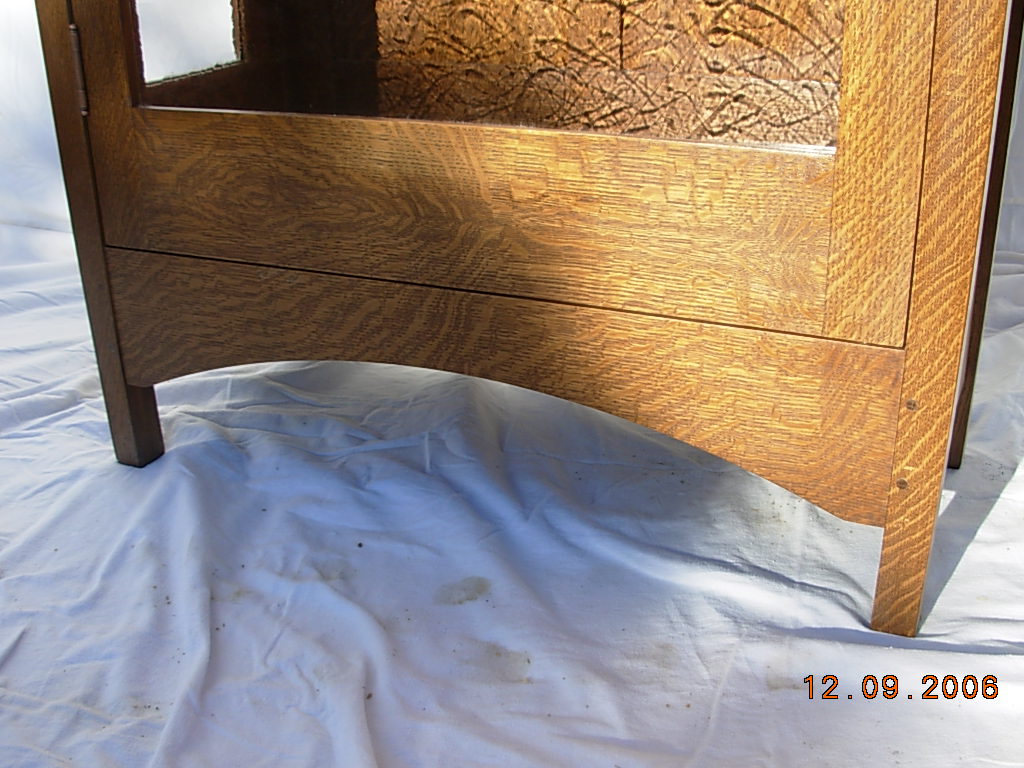 |
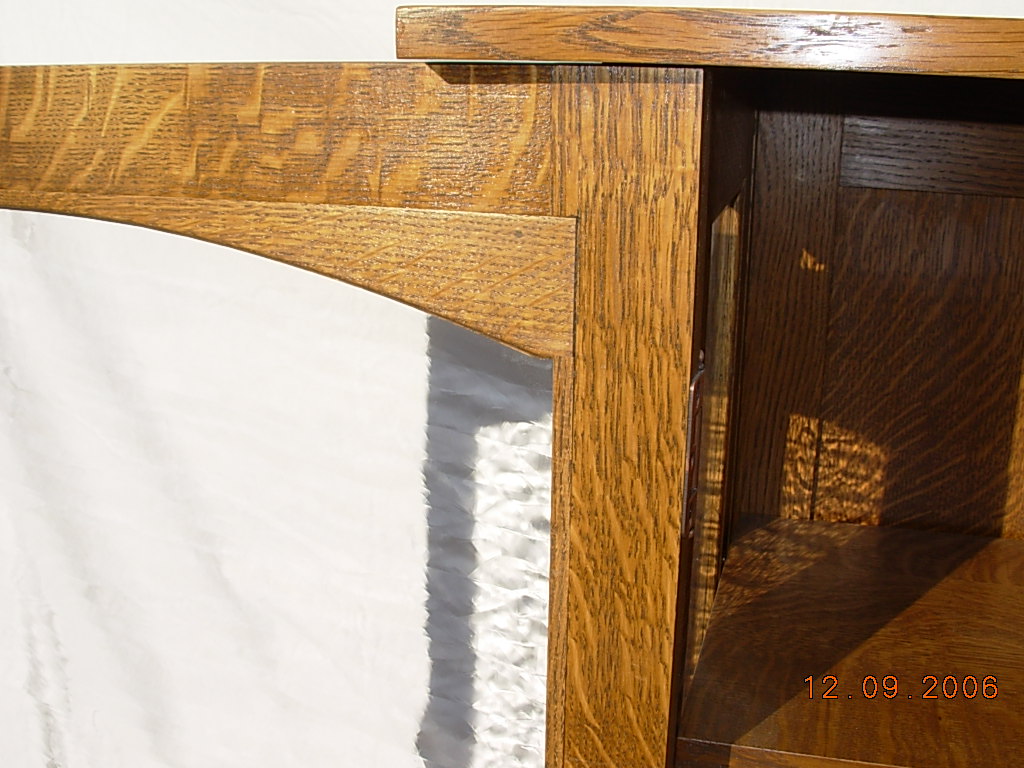
| As you can see, the door rails and the arched front apron are all cut from the same nicely-figured bookmatched piece of quarter-sawn white oak. |
 |
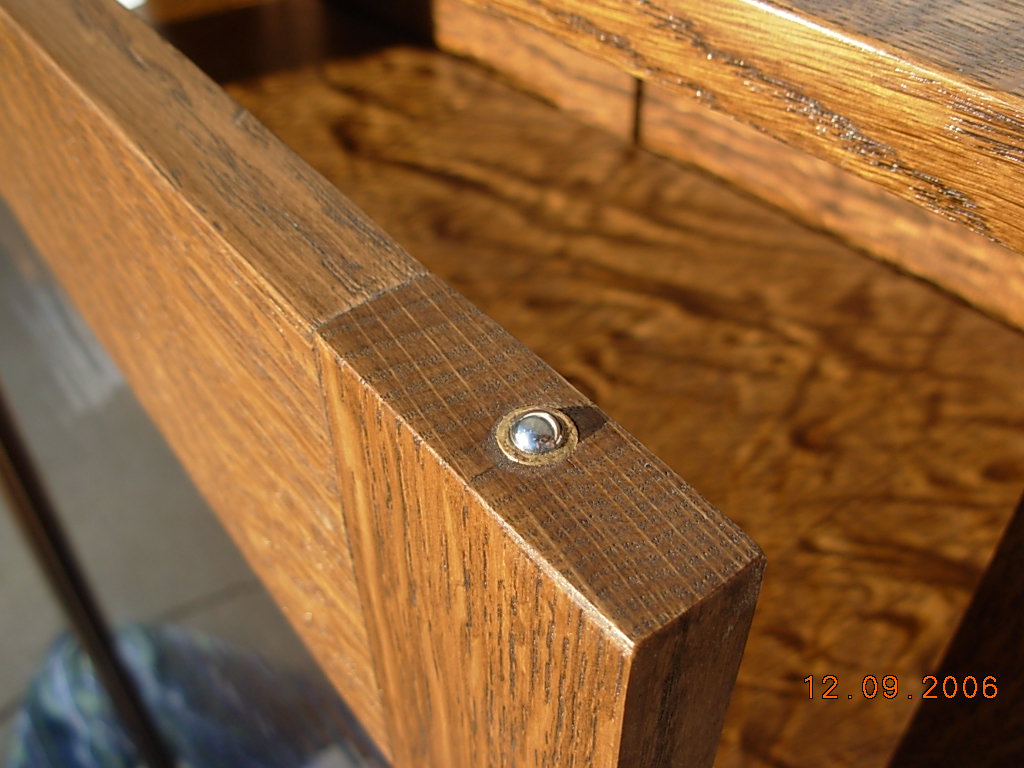
| I make all my dowels for the pegged tenons the old fashioned way... by pounding oversized square stock through a steel dowel plate. This assures that the dowels fit perfectly with no surrounding gaps. |
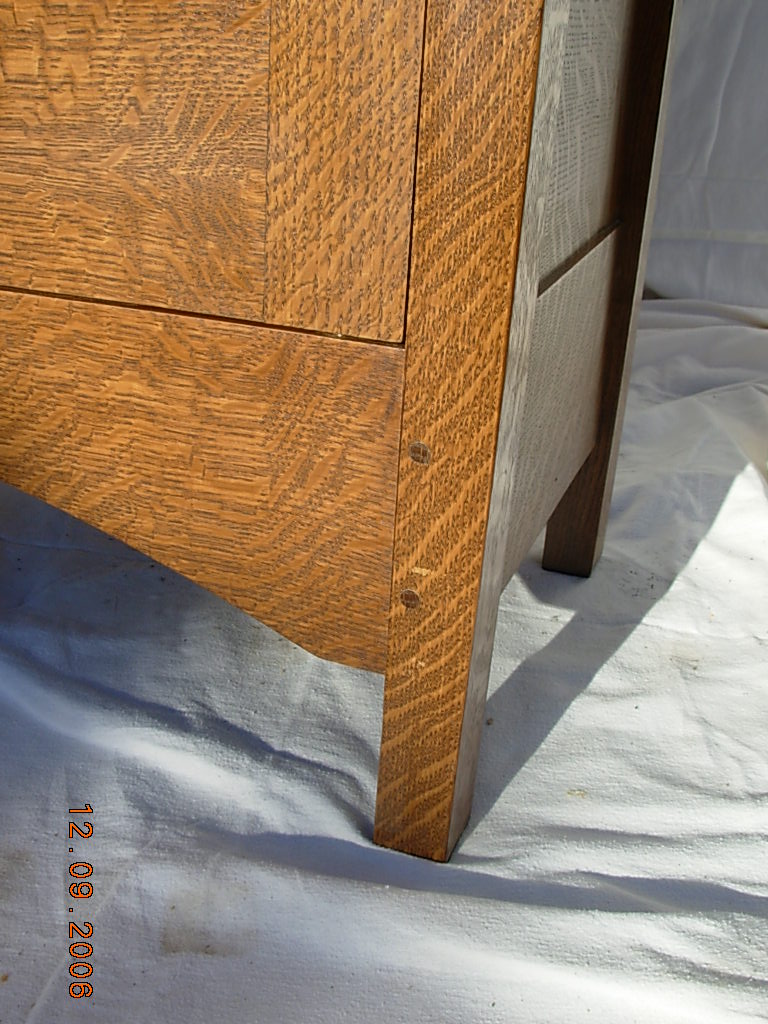
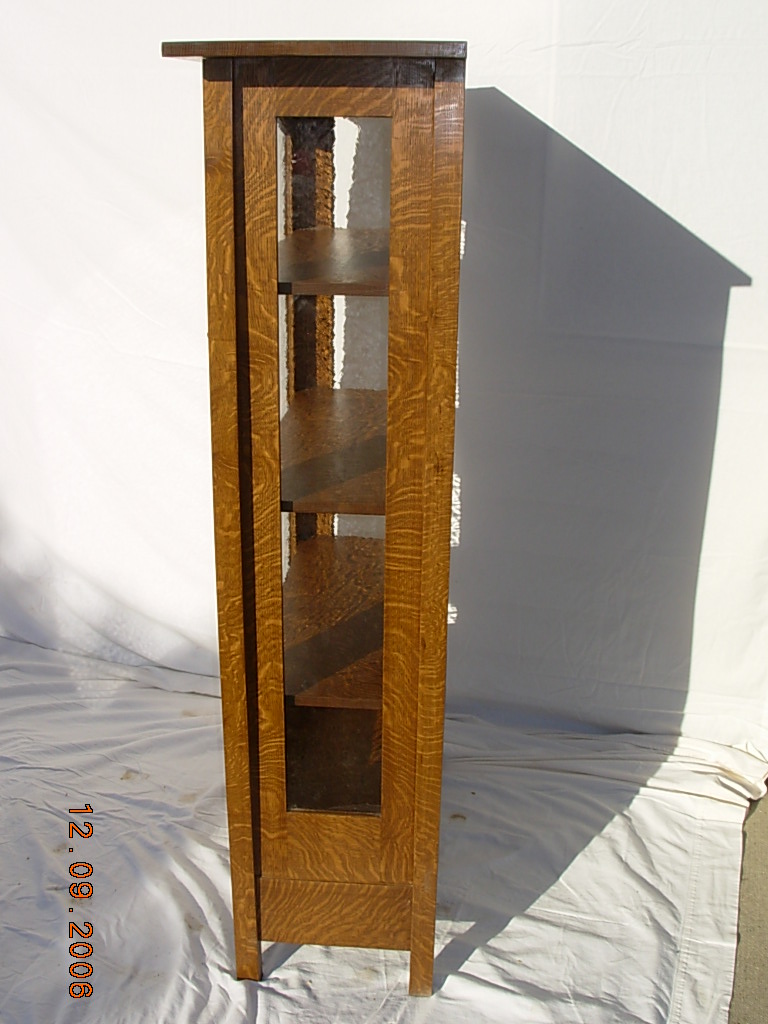
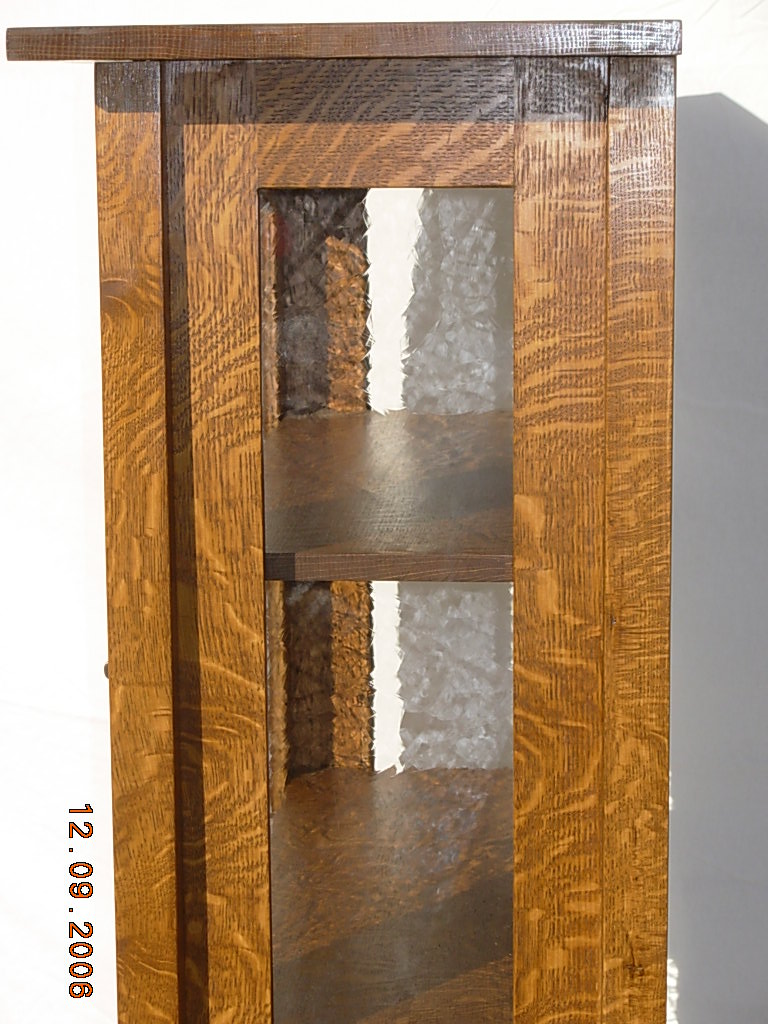
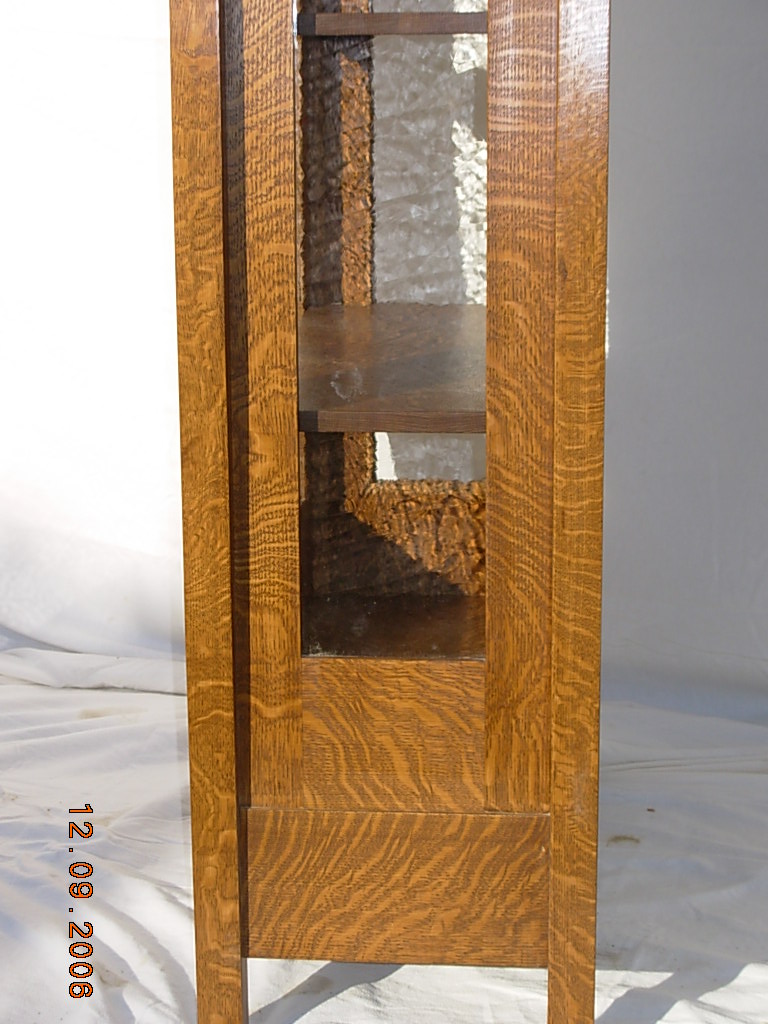
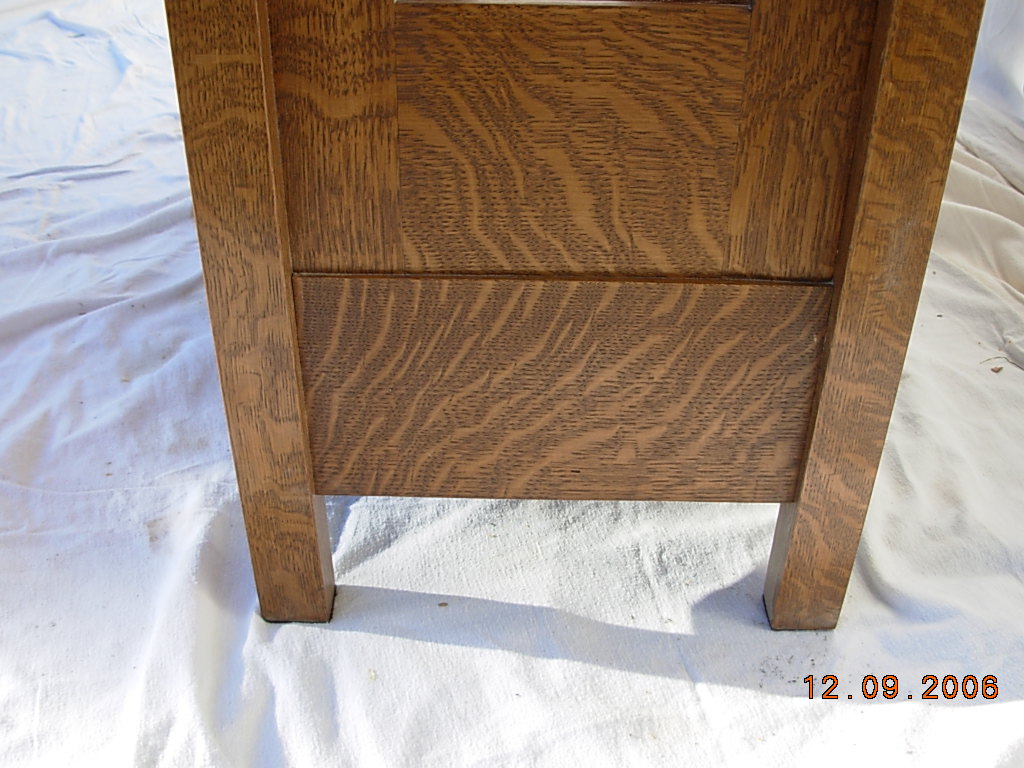
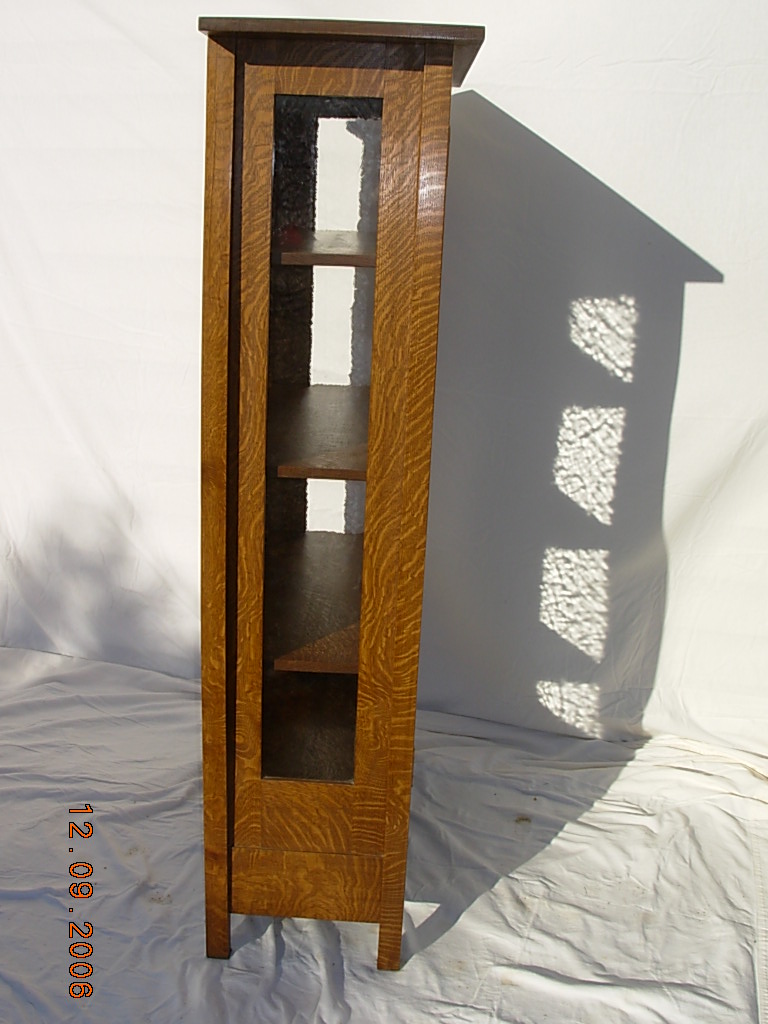
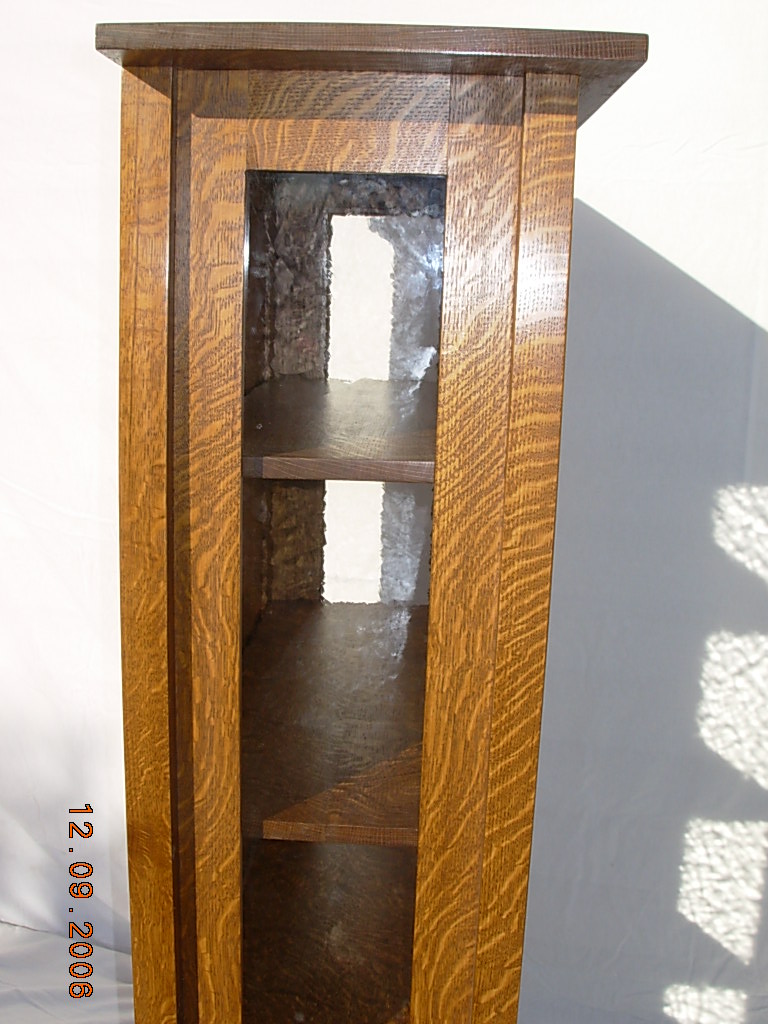
| You'll notice in the next series of pictures that the ray flecks extend with continuity across the legs and stiles of both sides of this piece. This is accomplished by using a single board for the vertical stiles on each side of the glass panels and for the veneer that covers the outside faces of the legs. This is a time consuming process, but I think you'll agree that it adds a special touch to this piece. |
 |
 |
 |
 |
 |
 |
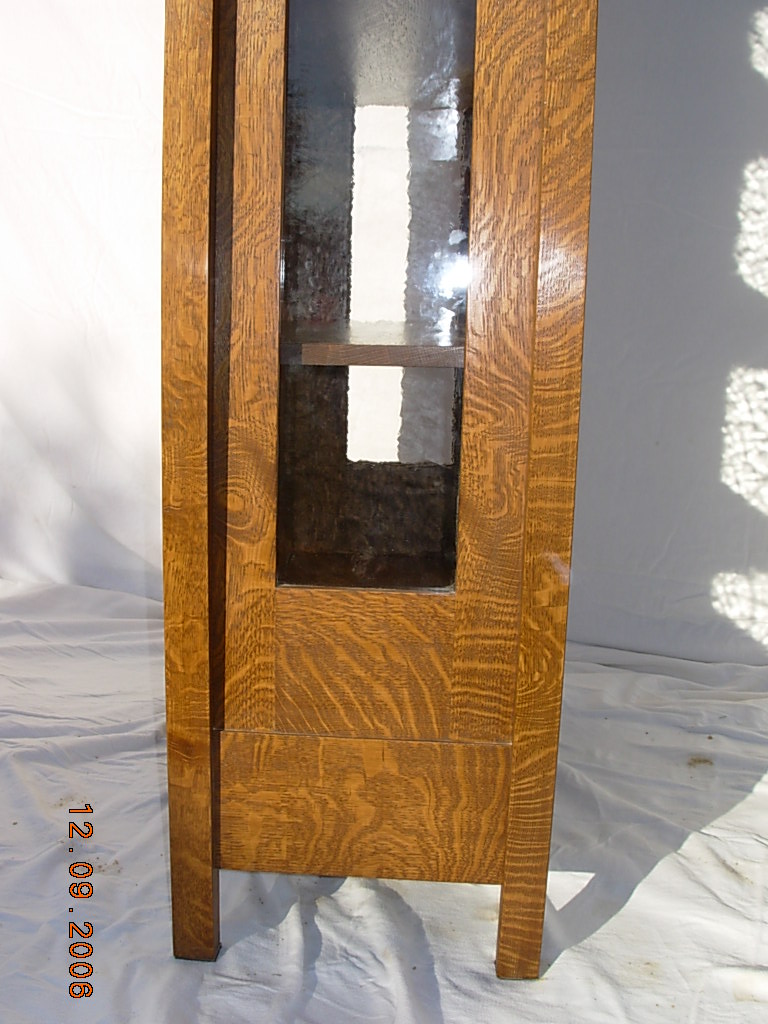 |
| Three sides of each leg
have quarter sawn figure. The outsides of the legs have a double
taper. This requires that the outsides of the legs
be veneered after the tapers are cut. To assure color and grain
matching, all lumber for this piece came from the same tree including
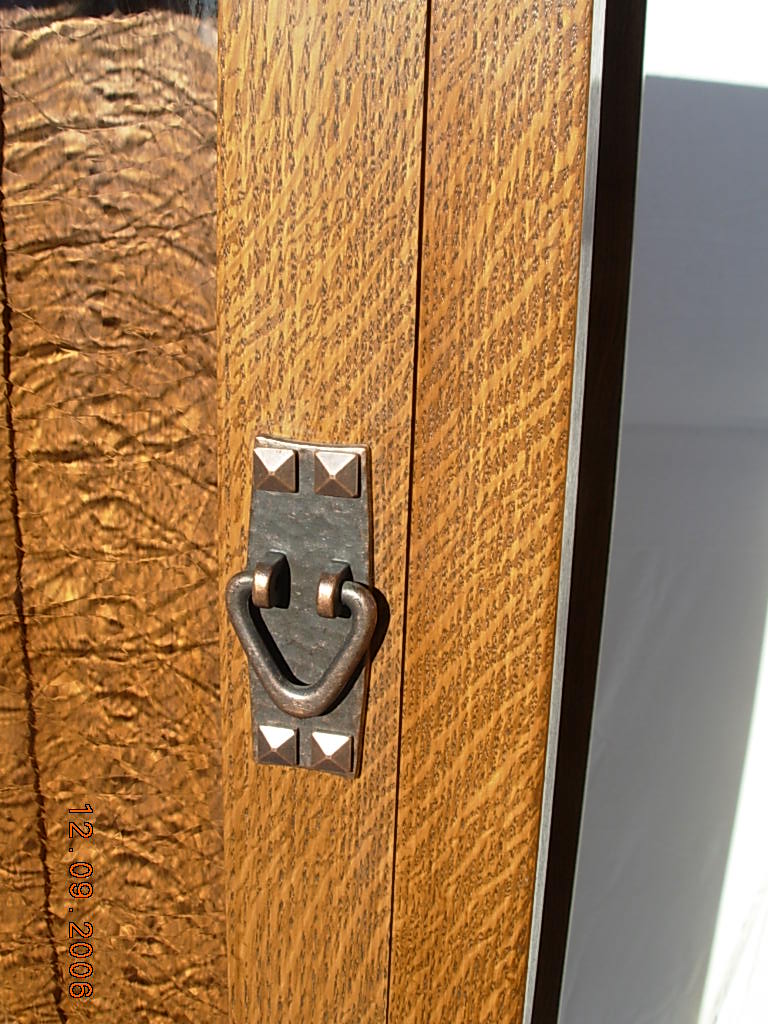
this shop-cut veneer and the hand made pegs. Note in the picture below that the ray flakes also continue across the front of both legs and the vertical stiles of the door (these pieces were ripped from one wide quartersawn white oak board and carefully matched during construction). |
 |
| Care was taken throughout this project to match the style and orientation of the medullary ray flecks so the figure is not only exceptional, but cohesive. This is possible with furniture like this that is hand made one at a time, and this level of attention to detail was not practical in the factory setting that produced Stickley originals. |
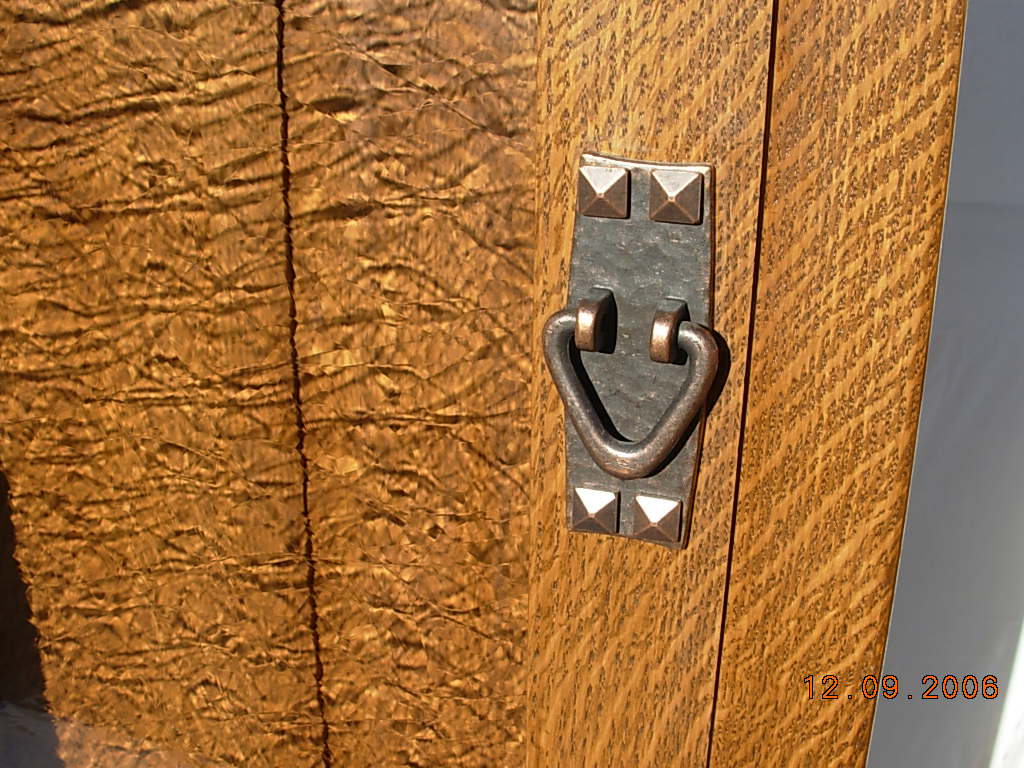 |
| The door pull is a heavy cast copper Stickley reproduction. The pyramid heads are actual screws that attach the pull to the door. |
 |
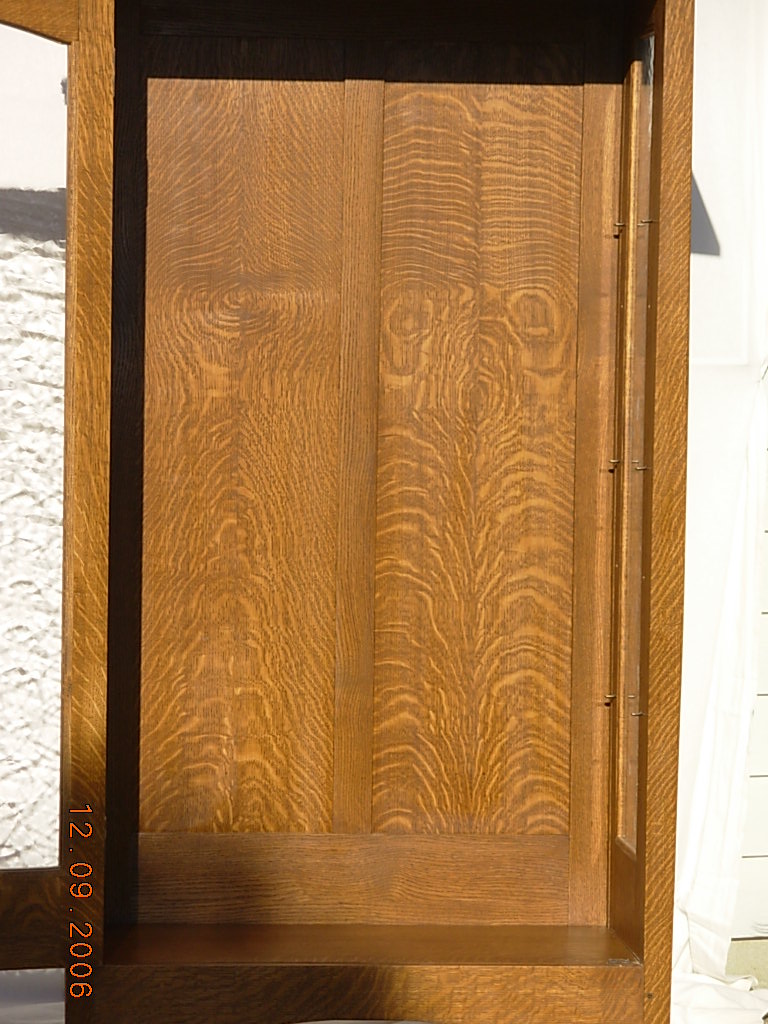 |
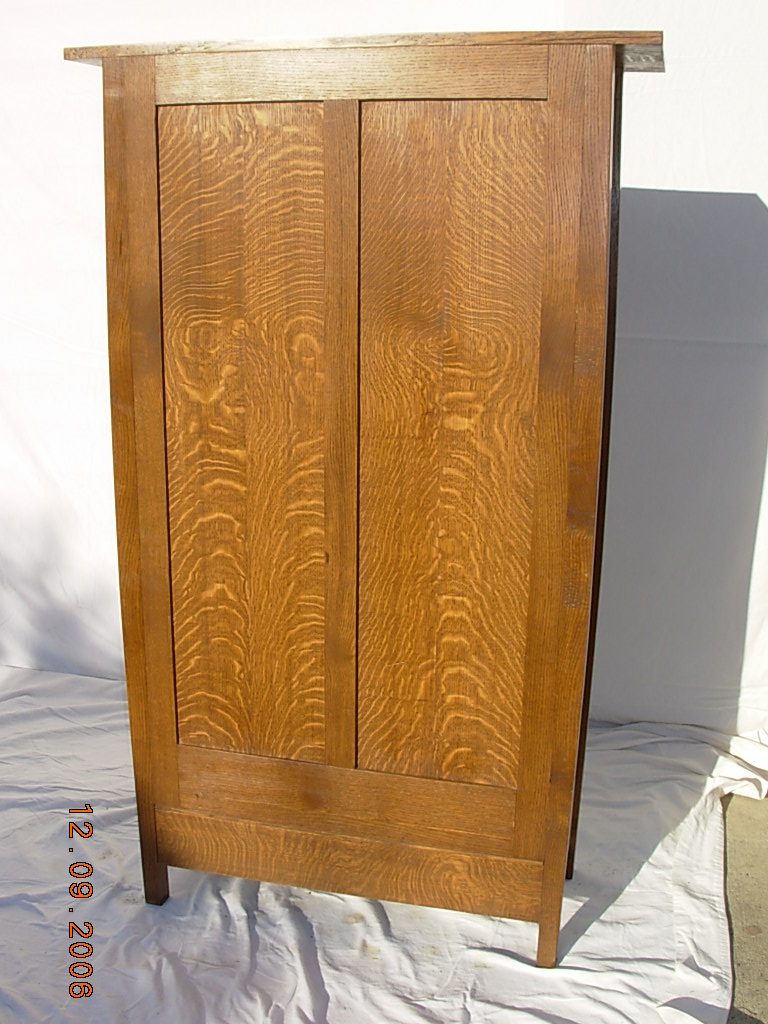
| The back panels are solid bookmatched quartersawn white oak with some spectacular medullary rays. Well cut quartersawn white oak is increasingly difficult to get due to cost, scarceness of good saw logs, and the challenge of sawing it properly. I am fortunate to live in the Midwest where some of the finest white oak trees grow. I have begun working with a private sawyer to cut large white oak logs into some amazing quartersawn lumber, and have really become inspired by the beauty of this wood. Look for my future Stickley reproductions with massive tops and legs like his very early work, or feel free to contact me about private commissions. |
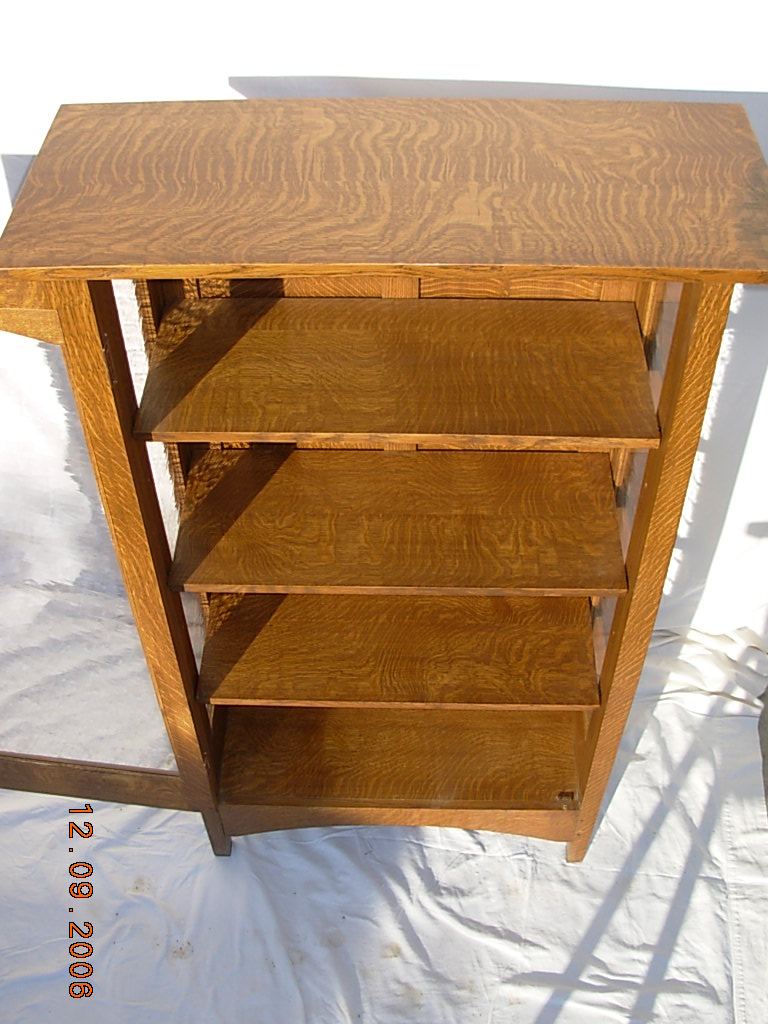 |
| As you can see, the shelves and bottom panel of this hutch are also made from very nicely figured solid quartersawn white oak. |
|
|
| The top and bottom bullet catches on the door are made by Brusso and are some of the finest crafted in the world. |
 |
| The glass in this piece is modern reproduction glass called GNA or German New Antique glass. GNA closely resembles the texture and appearance of mouthblown antique glass. It is of uniform thickness, color and texture, and is highly transparent. It appears a bit "busy" in the sunshine, but is much more subtle in normal lighting conditions. The molding on the inside of glass is all custom milled and fit from matching white oak stock. |
| Gustav Stickley stated in
the September 1915 issue of his Craftsman magazine: Gustav complained that "imitation period furniture" bordered on immorality, but he asserted that "faithful copies are an entirely different matter and are not to be ranked with the loose, untruthful shams so commonly offered for sale". I believe you will find this piece to be a "faithful copy" of his work. |
| Return to Jason Math's woodworking main page |